


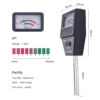
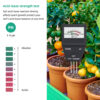
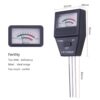

Description
How to analyze soil fertilizer
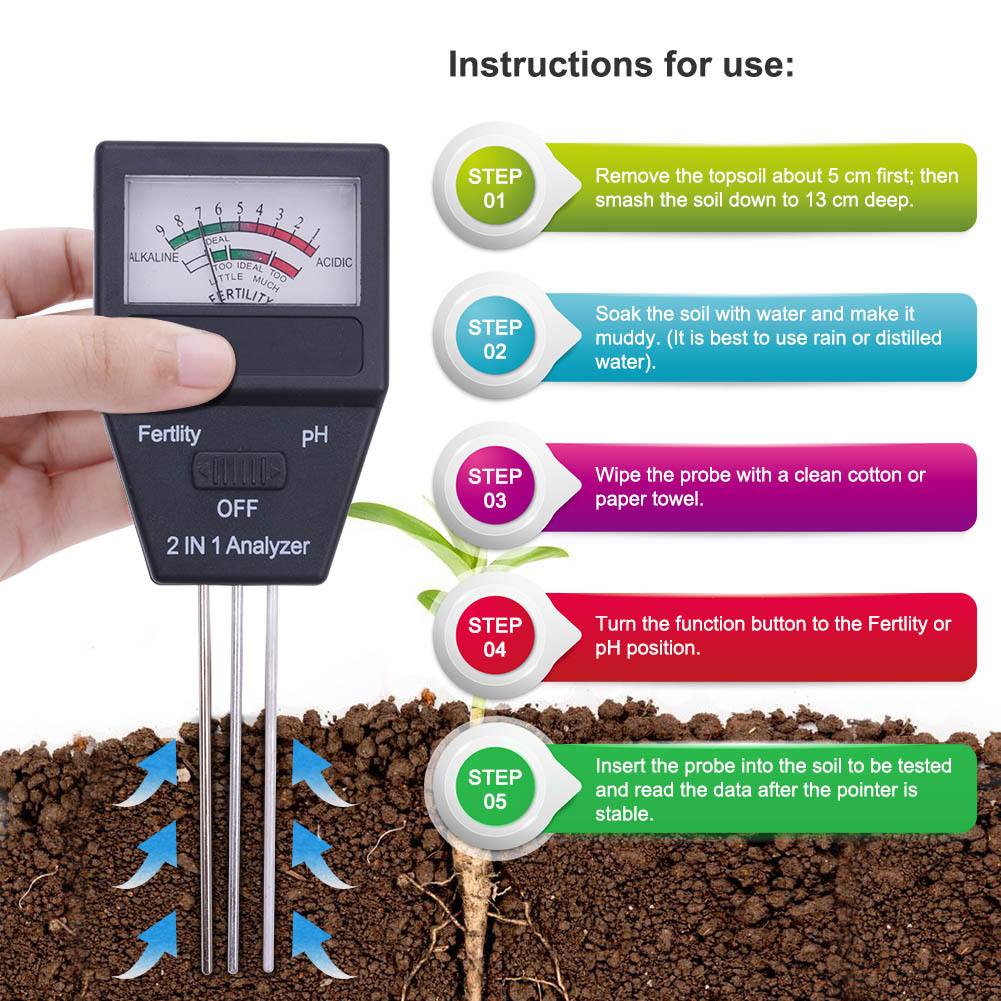
- Remove the topsoil about 5 cm first; then smash the soil down to 13 cm deep. And clean up all the organic impurities in the soil that will affect the test results, such as leaves, roots and so on.
- Soak the soil with water and make it muddy. (It is best to use rain or distilled water).
- Wipe the probe with a clean cotton or paper towel.
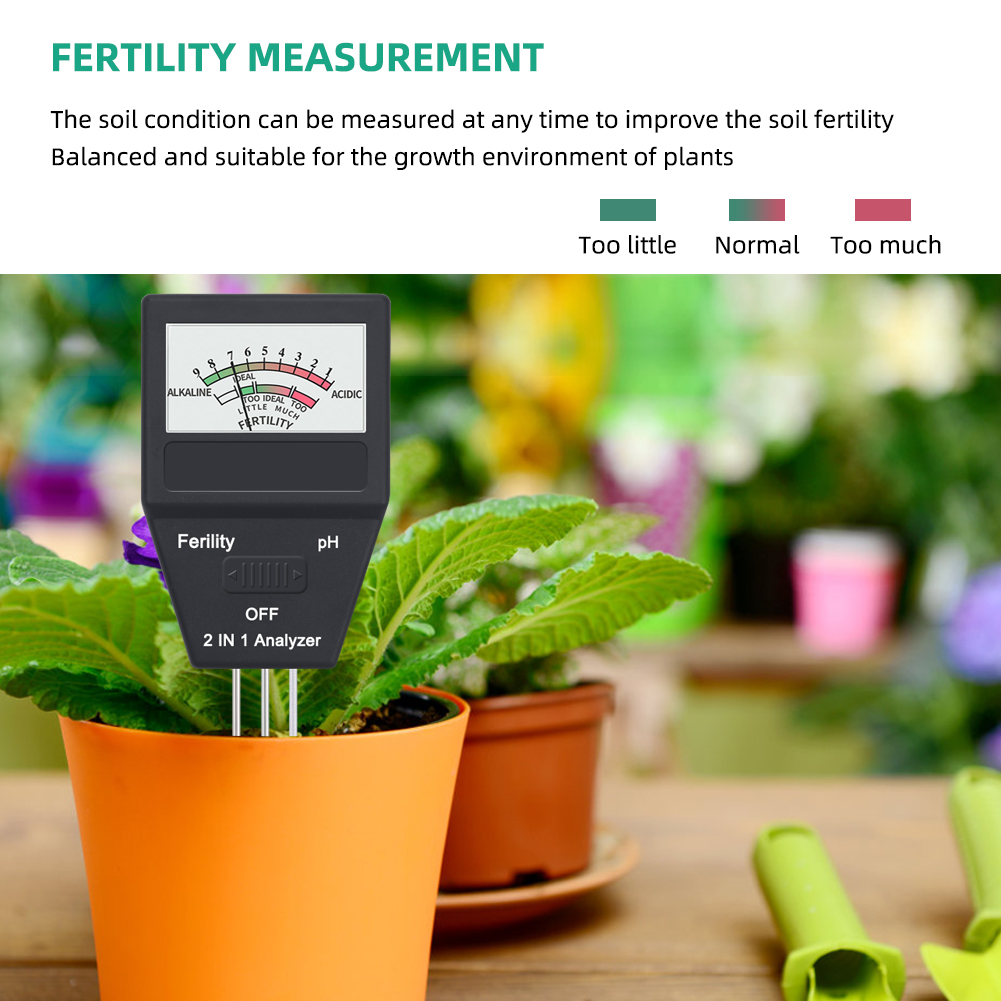
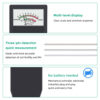
- Turn the function button to the first gear from the left.
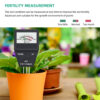
- Insert the probe into the soil to be tested until the soil is no more than 2.5 cm from the fuselage. Wait up to 10 seconds, and the data can be read after the pointer is stable.
- Record the data. Remove the probe from the soil and thoroughly clean the probe.
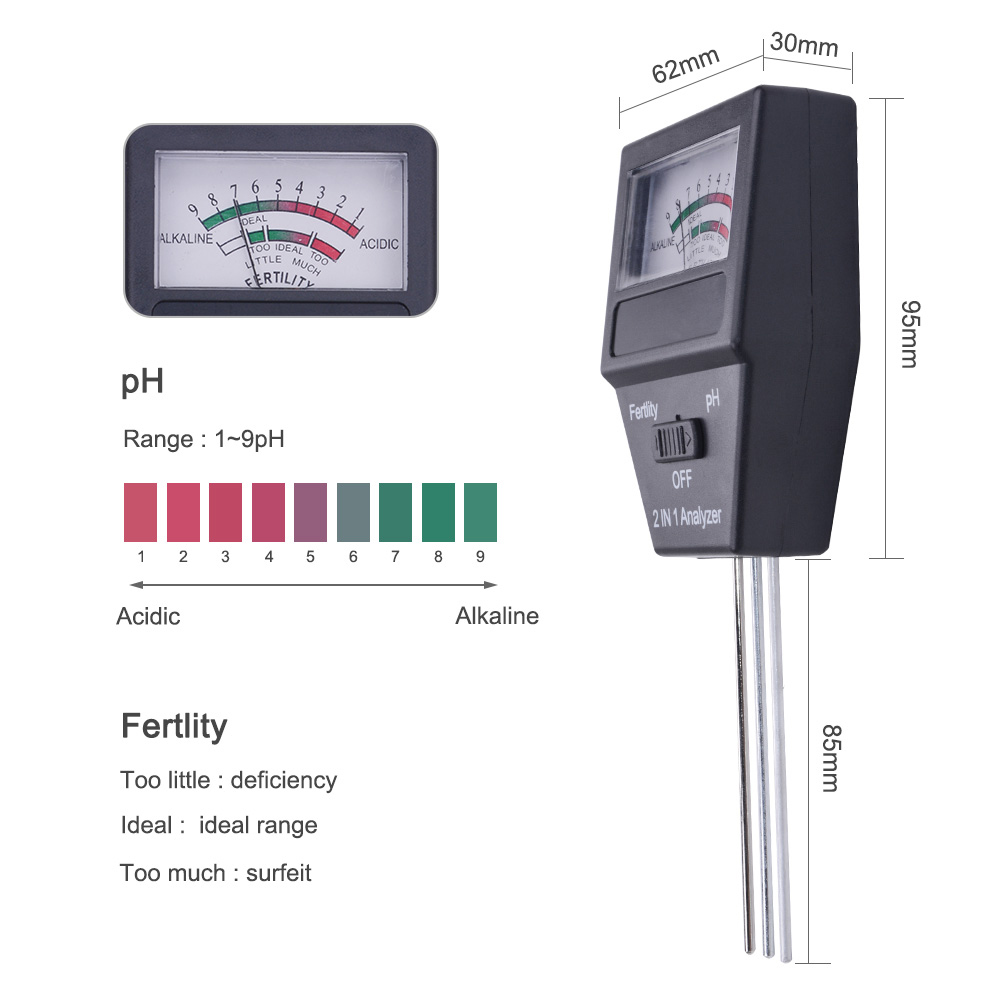
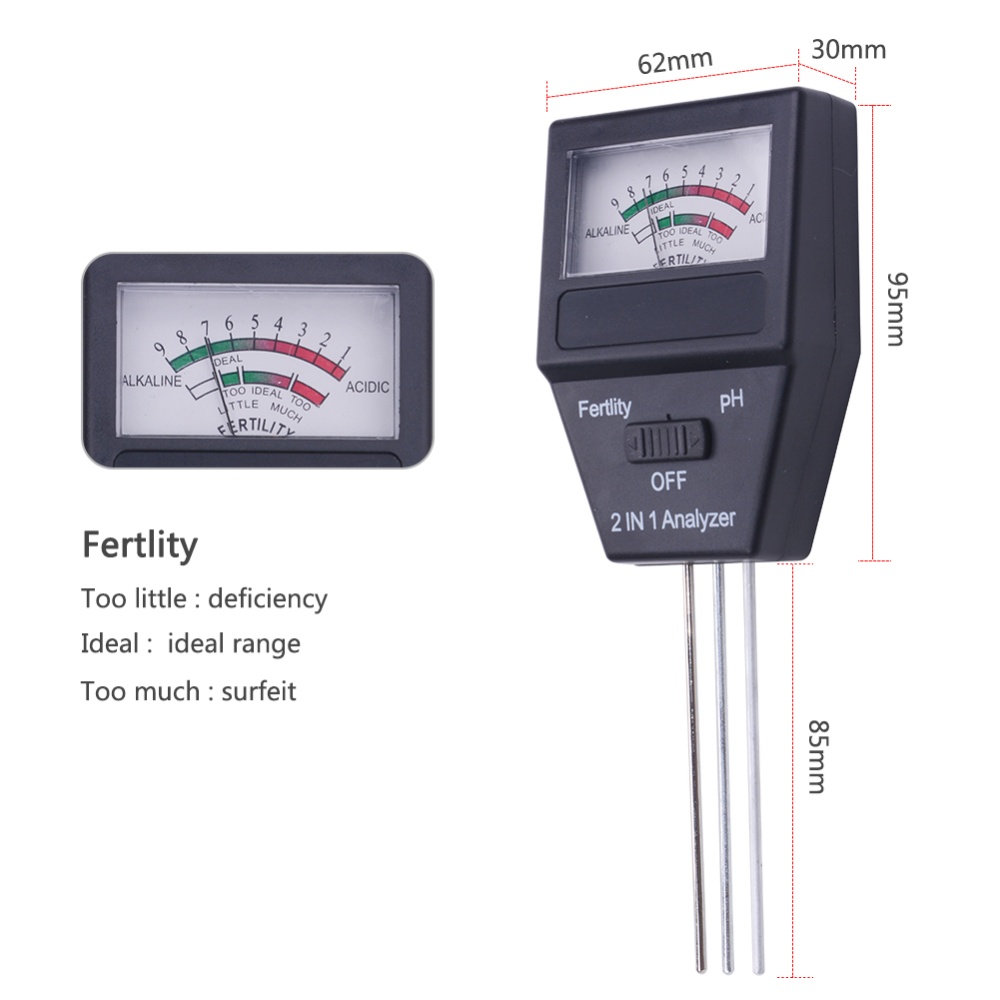
The judgment criteria of the analysis results are as follows
Lack of (TOO LITTLE)
Nitrogen less than 50 ppm
Phosphorus less than 4 ppm
Potassium less than 50 ppm
Ideal range (IDEAL)
50-200 ppm
4-14 ppm
50-200 ppm
Excess (TOO MUCH)
Greater than 200 ppm
Greater than 14 ppm
Greater than 200 ppm
· Unit ppm: parts per million
If the analysis shows “TOO LITTLE” means: lack
Please use liquid fertilizer for the different plants you plant. (Refer to the instructions on the fertilizer bag)
If the analysis results show “IDEAL” means: ideal
According to the different plants you plant, use fertilizer and apply it once a month in combination with irrigation.
If the analysis results show “TOO MUCH” means: excess
1. Drain a large amount of water to dilute excess nutrients;
2. For potted plants, they should be replanted into new soil;
3. Do not apply any fertilizer, but add feces, compost, plant residues, leaves and other organic matter to the soil.
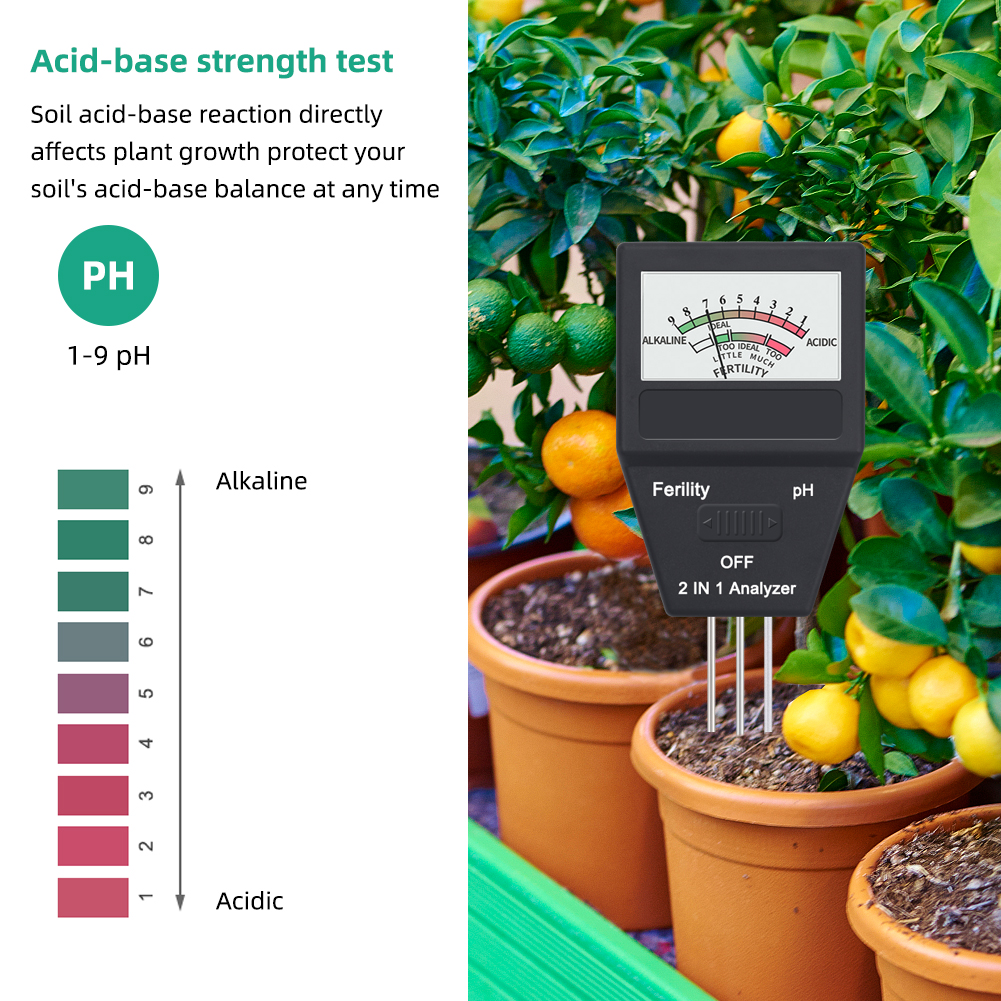
How to analyze the pH of the soil
- Remove the topsoil of the soil to be tested by about 5 cm; then smash the soil down to 13 cm deep. And clean up all the organic impurities in the soil that will affect the test results, such as leaves, roots and so on.
- Soak the soil with water and make it muddy. (preferably rain or distilled water)
- Turn the function button to the rightmost gear.
- Wet the probe. Wipe the rightmost of the three probes with a clean cotton pad.
- Insert the probe completely into the soil being tested.
- Wait 1 minute to read the data.
- After the test is finished, wipe the probe and dry it.
Special Note
Please do not insert the probe into the soil for a long time, and do not use this device to test the liquid to avoid damage.


 2 Pack Solar Garden Lights Outdoor Stainless Steel Warm White L-ED Pathway Lamp Garden Decoration Landscape Lighting for Patio, Lawn, Yard Walkway
Reviews
There are no reviews yet.